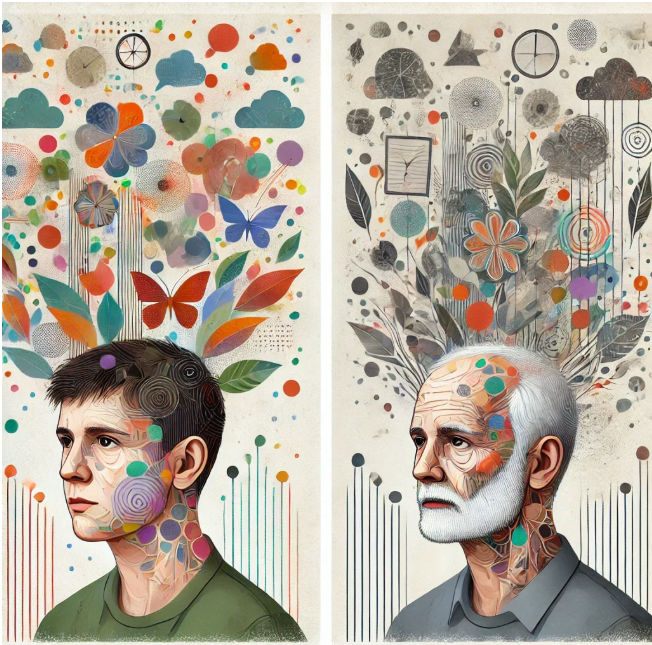
Attention Deficit Disorder (ADD)—or as the cool kids now call it, the inattentive subtype of ADHD—doesn’t exactly come with an expiration date. It’s not like a carton of milk you can toss when it starts to smell funky. Nope, this neurodevelopmental quirk sticks around, shapeshifting as we age. But how does it look different between young adults (say, 18-25) and full-fledged adults (let’s call that 26 and up)? Spoiler: it’s less about age and more about life’s chaos levels. Let’s break it down with some stats, a few laughs and a lot of “yep, that’s me” moments.
The Basics: What’s ADD Doing Here Anyway?
First, a quick refresher: ADD isn’t about bouncing off walls (that’s ADHD’s hyperactive cousin). It’s the daydreamy, “where’d I put my keys again?” vibe—trouble focusing, organizing, or finishing anything without a heroic dose of caffeine or panic. About 7.6% of kids aged 3-12 have ADHD (with many in the inattentive camp), per a 2023 meta-analysis from the Italian Journal of Pediatrics. But here’s the kicker: up to 90% of those kids carry symptoms into adulthood. So, ADD doesn’t vanish—it just gets a new wardrobe as life gets messier.
Young Adults: The “I’ll Figure It Out Later” Phase
Picture a 20-year-old juggling college, a part-time gig at a coffee shop and a social life that’s 80% TikTok. For young adults with ADD, this is peak chaos season. The brain’s still wiring itself—literally. Research from Nature (2021) shows structural brain differences in ADHD persist into young adulthood, especially in areas tied to focus and impulse control. But here’s where it gets fun (or tragic, depending on your vibe):
- Procrastination Level: Expert. A 2022 PMC study on ALSPAC data found 20% of young adults with persistent ADHD struggled with social outcomes like employment by age 25. Why? They’re masters at “I’ll start that essay tomorrow”—until it’s 3 a.m. the night before it’s due.
- Distraction Central. Phone notifications? New game drop? That one friend who texts “u up?” at midnight? Young adult ADD brains are like moths to a flame. The CDC notes 11.4% of U.S. kids have ADHD by 2022 and for those hitting their 20s, the digital world is a focus shredder.
- Humor Twist: They’ve got 17 browser tabs open, three are labeled “urgent,” and one’s just a recipe for brownies they’ll never bake. Classic.
Stats say 5.6% of teens aged 12-18 have ADHD (Italian Journal of Pediatrics, 2023), and many roll right into young adulthood with it. The difference? They’re still figuring out how to adult, so ADD feels like a quirky sidekick—annoying, but not yet a dealbreaker.
Adults: The “Wait, This Is My Life Now?” Realization
Now fast-forward to your 30s, 40s, or beyond. You’ve got a mortgage, a job that expects you to actually show up on time and maybe a kid who’s asking where their soccer cleats are (spoiler: you don’t know either). For adults with ADD, the stakes feel higher and the symptoms shift gears:
- Masking Mastery. Adults often get really good at hiding ADD. A CDC report from 2024 estimates 10.5 million U.S. adults live with ADHD, but many never got diagnosed as kids. They’ve spent years faking it ‘til they make it—except the “making it” part is still TBD.
- Time Blindness Hits Hard. Young adults might miss a class; adults miss a tax deadline. The NIH MedlinePlus Magazine (2024) calls this “time blindness”—ADD’s gift of underestimating how long everything takes. Cue the “I’ll just be five minutes late” lie we all know too well.
- Humor Twist: Their inbox has 2,347 unread emails and they’re still convinced “inbox zero” is a myth invented by productivity gurus with no soul.
The prevalence of ADHD in adults hovers around 3.1%, per a 2023 ScienceDirect umbrella review of 21 million people. But here’s the rub: adults face bigger consequences—think job loss or divorce—because life doesn’t grade on a curve anymore.
Side-by-Side: The Big Differences
So, what’s the real split between young adults and adults with ADD? Let’s chart it:
- Responsibility Load. Young adults are dipping their toes into adulting—ADD makes it a stumble, but there’s room to recover. Adults? They’re drowning in obligations and ADD’s like an anchor.
- Symptom Spotlight. Young adults lean into distractibility and procrastination, per CHADD’s teen data (2018). Adults wrestle more with organization and follow-through—think forgetting to pay bills vs. forgetting a group project.
- Coping Style. Young adults might lean on friends or apps (hello, reminder pings!). Adults often turn to therapy or meds—30% of adults with ADHD didn’t get treatment as kids, says the CDC (2022), so they’re playing catch-up.
Wrapping It Up: ADD’s Life Tour
ADD doesn’t care how old you are—it’s the uninvited guest that keeps RSVP-ing to your life party. For young adults, it’s a loud, messy plus-one that’s still kinda fun. For adults, it’s the quiet roommate who forgets to pay rent but somehow sticks around. The good news? Awareness is growing and whether you’re 22 or 42, strategies like timers, lists, or a good therapist can keep ADD from stealing the show.
Got your own ADD quirks—young or old? Drop ‘em in the comments. We’re all just trying to find our keys and our sanity, one distracted day at a time.